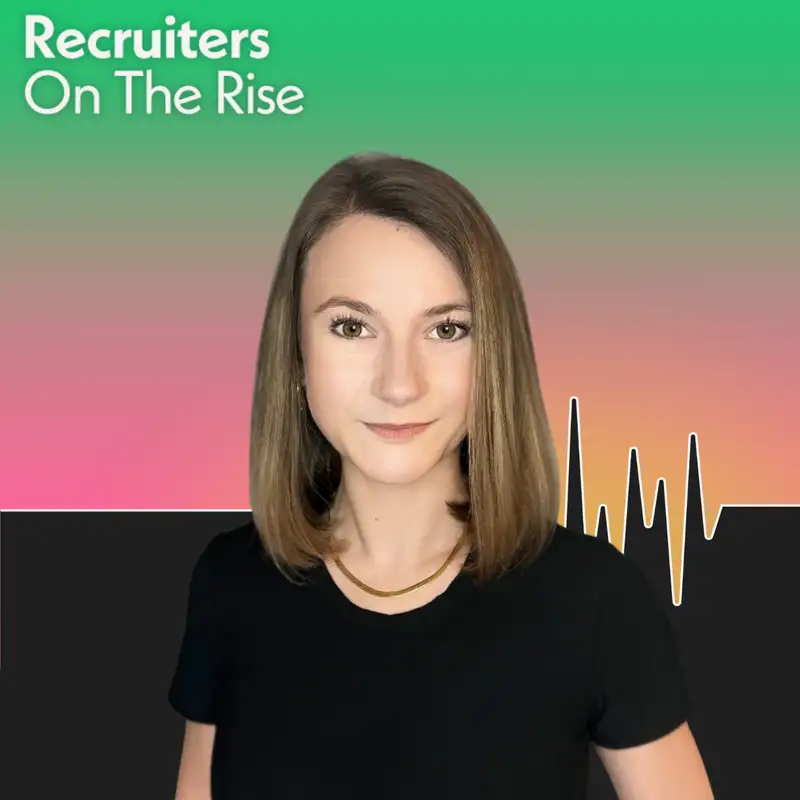
ROTR - Allison Dykes
===
[00:00:00] This is Recruiters on the Rise, and I'm Colleen Gallagher. Join me for candid conversations with talent leaders as we explore the work that drives them, the lessons they've learned, and how they're helping people find careers they love. This show is sponsored by Lavalier, an interview intelligence platform built by Textio.
Colleen : Hello everyone, and welcome to another episode of Recruiters on the Rise. I'm so excited to have today's guest with us. She started her career in agency recruiting and moved on to work with a venture capital firm, helping portfolio companies build their HR and talent strategies from the ground up.
So she's really, uh, knowledgeable about what it takes to hire well and scale fast. She joined her current company at 25 employees as the first and only HR person, grew it to 60, and built the entire people function from scratch along the way. Uh, she owns everything from recruiting through performance management through termination, and she'll tell you why that has changed how sh- [00:01:00] she thinks about every hire she makes.
She currently serves as the human resources director at Harness. Allison Dykes, welcome to the show.
Allison Dykes: Thank you so much for having me. I'm excited to be
here
Colleen : Yeah. I'm excited for everything we're gonna cover. I think, I think it will be really, um, really good, really, really good topics. So, um, I love to start this podcast just by asking everyone I have on as a guest, what is the one thing or one action that sets the best recruiters apart from the rest?
Allison Dykes: I would say follow up. Follow up and follow through. If you say that you're going to do something, make sure you do it in the timeframe that you say it's gonna be, whether it's following up with a candidate on feedback or making sure that you're staying in touch with your hiring managers and hiring team throughout the process.
I think it's a non-negotiable
Colleen : So it sounds like, you know, you care a lot about the candidate experience and, really giving people, um, clarity around what's coming. Like, often that is challenging for recruiters because of [00:02:00] lack of follow-up and communication from the hiring teams. So how do you think about that or, or accommodate for those types of things, in your planning and follow-up cadence?
Allison Dykes: Yeah. My goal is always to share with candidates at the end of the call when I expect to receive feedback or when I expect to follow up with them. And to your point, sometimes hiring managers or hiring teams get delayed with their feedback. They're not sure about what they have. So if I tell a candidate I'm gonna follow up with them before the weekend with feedback, if I don't have that feedback, I still find it really important to follow up with them and let them know that they're still top of mind.
"I'm still thinking about you. I don't have the feedback yet, but just bear with us through the process." It really helps them along the way to know that you still value them, even though things may not be moving at the pace you originally expected.
Colleen : Yeah. I think one, one thing you shared on this, um, previously is that, you know, your- the candidate experience is the first impression of your, of your company. And so how, how do you think about that and, um, you know, just plan for that [00:03:00] and, and how does that change how you interact?
Allison Dykes: Yeah. I think that you, you are the first interaction that the person gets with the company. You're the face of the company for them and throughout the entire hiring process. And so how you treat a candidate and how you make a candidate feel, not only on the initial call while you're with them, but throughout the entire process, keeps them interested or disengaged with your brand.
So the brand you create for yourself is a representation of your company, and keeping that high integrity throughout the process is important. Even if the candidate doesn't get the job, you want them to have a great, um, impression of your company so that it's, it's your reputation that you're leaving out in the market with
Colleen : Yeah, I heard somebody once say, how you get treated during your hiring process is probably the best you're gonna get treated.
and that, like, framing really resonated with me. And so I, you know, I do think the best recruiters are thoughtful about, you know, making sure a candidate feels, You know, like they're getting the [00:04:00] attention they need, even to your point when they might not be the person that's the right fit right now, because you don't know if that's gonna come around later.
Um, you might have another role. You might-- The person you hire might not work out. Your needs might change. And so it is important to think about it not only for people you are excited to hire, but for everyone as well.
Allison Dykes: Absolutely
Colleen : Do you, um... Where do you stand on the, um, what type of feedback do you give to folks that you end up not hiring?
Allison Dykes: I think that's important to let them know that you appreciate their time in the process. And then if you're able to give some feedback, depending on, on what the hiring team presents to you, you kind of have to use your discretion in what feels appropriate to share with them. I, you can't give everybody, you know, the full raw feedback, but how can I give something that's constructive and can help them in their next interview process?
If I'm able to do that, I like to share it when possible.
Colleen : Yeah. I think there was like a post that went viral this week about a candidate who was upset that they got fair- pretty specific detailed feedback. [00:05:00] I'm curious if you've ever had any, um, uh, not so great, uh, responses to sharing feedback with people, or generally are they overall positive?
Allison Dykes: I've definitely received pushback on feedback that I've given to candidates, and that's why I try to tailor what I, what I say to be really careful with what I share with them. Um, but overall, people are just thankful that you followed up and that you, you know, gave them the time. But every once in a while, I, I will get someone who feels strongly opposite of, of what I've shared with them.
So, um, I like to keep it as light as possible.
Colleen : you know, I, I know I mentioned in your intro you, you joined, um, your current company when it was 25 people as the first HR person and built the whole function yourself. Like, you know, regardless of whether it's at that company or at some of the VC firms that you've, um, worked with before as well, like, tell me a little bit more about where you start.
Allison Dykes: Yes. So that journey was really taking a look at where are we at right now? Um, 'cause the company had been in business [00:06:00] long before I'd gotten there with no HR function. Um, so seeing, you know, what compliance, you know, do we have in place? Have we completed forms that we've needed to? If not, going back and making sure that we get ourselves in a compliant state, working with our payroll provider. And I love working with PEOs. Um, personally, when you're with a company that's 100 under, uh, employee size, it really helps you with that multi-state compliance. It helps you, um, if you're a party of one, which I've been my entire career. So, um, keeping all of those things in place, I think is just the, you know, the most important foundation to lay for it. And then you can take that time once you get out of some of that retroactive, um, phase and start thinking proactively, how can we be creative? How can we focus on the employee experience, which also incorporates the candidate experience? So how are we looking at recruiting? How are we looking at onboarding?
And then performance management during somebody's time here, all the way through terminations. And I think how you are with each of those processes and phases of the [00:07:00] employee journey helps with the intentionality and helps with their overall experience. You want to make sure that people feel valued while they're on your team. Um, and that starts with the recruiting process.
Colleen : Yeah. you, you talked about, uh, when we had spoken previously, like creating intake forms, interview templates for every role so that candidates all get the same experience. How do you get, how do you get hiring managers to actually use them?
Allison Dykes: I think it's difficult to get hiring managers and teams to adopt them. I think when I first started creating my intake forms, I thought it, it makes sense. Everybody's gonna wanna use this. And sometimes there's a little bit of resistance when you try to put processes in place. Everybody wants processes until you start to enforce them. Um, so I like to have an intake call with all of my hiring managers, and sometimes I just do the heavy lifting myself before those calls. So I'll put together a draft of what I think the process may look like based off of if I've worked with them before or if I've worked with hiring different skill sets, you know, previously. Um, and I'll put together everything from, [00:08:00] know, what interview processes are we gonna have, who's involved in those hiring processes, what questions would we like each person to ask during the process so we're not being overly duplicative with the, "Tell me your story. Tell me about your background," with every step of the process. Um, and incorporating things in there such as questions that go with our core values to make sure we're not only hiring for the skill set, but we're hiring for the culture that we have in place. So what I've found is if I really initiate that on the kickoff call and make my kickoff call about that intake form, it makes the process more smooth,
Colleen : Yeah.
Allison Dykes: Um, throughout everything.
Colleen : Yeah, I think, um, getting people to start from a blank page feels a lot harder, right? Which is why everyone-- well, a lot of people like using AI to write and things like that, um, or to clean up, you know, emails and stuff like that. Um, and I do think that it also indicates like a s-- it's a signal of trust, um, of, you know, [00:09:00] knowledge.
You know, I always like to think of it as recruiters are subject matter experts in hiring, and hiring managers are subject matter experts in their function and what their role needs. And like that intake or strategy meeting, as I h- as I hear a lot of people refer to it, is, is such a key way for folks to ensure you have alignment, and just, you know, prevent some of the, the issues that could come up later in the hiring process if you aren't aligned on what you're actually trying to hire for.
Allison Dykes: Sometimes taking the time to start a little slower ensures that the process can go more smoothly
Colleen : you, you've shared that you were actively hiring engineers, um, recently, and how has what you're looking for changed in the last year or two?
Allison Dykes: I think with the rise of AI, it's, it's very difficult to, to identify strong candidates. You know, resumes are, are able to be tailored, um, to your job description within seconds. And so someone can submit a profile that looks exactly like what you're looking for, [00:10:00] but it takes getting on the line with them, talking to them about the ownership they've had throughout the process of, of their career to understand if candidates are a good fit for your role.
So I think it's become more challenging, and there's a lot of noise out there from candidates and, and, you know, some candidates are applying to a lot of jobs and vice versa. There's a lot of noise from companies. Um, so really trying to filter through and find the best candidates that are a true match to what they're presenting, um, has become more difficult.
But, you know, it's the tried and true process. You get on the line with them, um, have a conversation and see what their skill set really is, and, you know, sticking to what we know as recruiters, and that's just having human interactions.
Colleen : Yeah. And I guess in, in some of those roles, how are you seeing, um, are there different skills or responsibilities or, or things like that that you're looking for that have changed even in the last 12 months?
Allison Dykes: I think, think there's a lot that's changed, but the tech stacks can remain the same. [00:11:00] Um, you know, our tech stack hasn't changed too much, uh, with where I'm at currently. But, um, I think there's a more focus on thought, thought leadership and more focus on ownership. So some of the questions I'm being asked to ask candidate is not so much around, you know, what technologies have you worked in for the last three to five years? But really, what, what features have you owned from end to end? What part have you played throughout the sprint process? Have you seen, you know, something develop from inception all the way to production? And that is becoming more important than just having the tech scats-- tech stack.
Colleen : Mm-hmm.
Allison Dykes: Um, that, that's what I'm really seeing is that managers are wanting more, know, voices in the room instead of somebody who's just pushing out
Colleen : Yeah. Yeah. Do you all-- Or what's your view on assessments? Do you do them or do you think they're valuable?
Allison Dykes: Yes. Um, typically my team has done assessments and they've changed over the years a little bit. Um, you know, depending on [00:12:00] if we're doing a, a front end, a back end, or a full stack developer. I think really what we've tried to do is consolidate. In the past, we would have two technical interviews, and it takes a lot of candidates' time and a lot of our engineering team's time. So every, every interview that we're doing towards technical interviews takes away from time that our team is actually working and producing. So I think what we've changed is we still do assessments, but we're consolidating them and figuring out how can we get the most information about someone's skill set
Colleen : Yeah
Allison Dykes: while still not taking away from the team's time. Um, so that's a constant challenge that we're working through.
Colleen : Yeah. I mean, I think that's, that makes a lot of sense, and I like the, um, what you shared around, you know, your, your head of engineering saying like, "I can't have folks in interviews all the time on the team." You know, it just takes away from t- from deliverability. And as quickly as people are able to deliver things now, when you take people out for [00:13:00] hours, you know, five hours a week even, it can make a difference, um, with, with the speed at which things are moving.
So, um, I really liked that trade-off framing that we talked about
Allison Dykes: Yeah, I agree. It's definitely been more effective, and our team still has opportunities to meet candidates along the way, but we're more mindful of their time
Colleen : Yeah. And one of the things you also shared is that, um, you know, talking about, and, and I think you just mentioned this around screening for culture fit, but not at, n- not without it having feel like a, like a gut feel exercise. Um, so how have you incorporated more ways? I think you talked a little bit about, um, culture questions.
So, you know, can you speak a little bit more about what that is?
Allison Dykes: Yes. So we've created a system for evaluating candidates, and it's against, um, the entrepreneur operating system or EOS model. Um, so you look at candidates from a get it, want it capacity to [00:14:00] do it, so that looks at if they're in the right seat. And then you look at each of our core values and determine if they, um, are, are a right fit.
So you have a right person or right, seat, right, um, right fit. And we evaluate candidates by asking specific questions around culture, around their skill set, and seeing, um, you know, how they line up with it. You know, some of our core values is progress over perfection, so you wanna ask somebody, "How did you overcome, you know, an, an issue or a problem that you weren't quite sure how to solve?"
And we're not looking for somebody who perfectly figured it out, but are you someone who's going to overcome, and solution, um, and try. So we've added more of those questions into our interview process, um, to kind of help us throughout the way to say, "All right. Does this line up against what we're looking for in candidates?"
Colleen : Yeah, I, hadn't heard too much about the en- entrepreneur operating system. Is that specific to the hiring process or does that go broader into your, um, [00:15:00] HR function?
Allison Dykes: That's the main focus from where I, where I sit is really looking at right person, right seat, and we do that for our hiring process, and then we also do that with our performance reviews. So we're incorporating that more into our semi-annual reviews with our employees and our current team, and that helps us to understand if our current team members are, are a right fit, um, or a right person.
Typically they are. We have wonderful people on the team. Um, but are they in the right seat? Do they have, um, skill gaps that we need to address, or are they ready for promotion? I think that gets us out of that, "I like this employee, so I'm going to move them forward to, to the next role," but really evaluating and making sure they understand their current role, that they're maybe even stretching into that next role, and is it time for us to go ahead and promote them and move them forward to the next position?
Colleen : Yeah. Yeah. And I think you're s- you sit in a, in a unique seat because you own recruiting through termination. A lot of recruiters think their job ends at the offer or, or at least [00:16:00] how we measure recruiters often ends there. Um, what changes for you when you own the whole thing?
Allison Dykes: Yeah. I think I have a unique opportunity to build trust as HR right at the first conversation with employees. So I'm their first impression of the company through the recruiting process. I typically am the one that extends them the offer and then facilitates their onboarding process. Um, and then, you know, as, as needs arise or if issues arise, I feel like employees feel comfortable coming to me because they already know me. Um, and so as we go through the termination process, you know, whether it's voluntary or involuntary, my hope is always that employees that I'm interacting with know the care and respect that I have for them, um, and that, you know, they're-- I'm a resource for them even after they're gone. Um, so I'm still that point of contact afterwards.
And it's always hard to see people go, but I think I do sit in that unique spot that I get to see their entire journey. Um, and, and my hope is always to end things on a positive note
Colleen : [00:17:00] Yeah. I guess I, I'd love to learn a little bit more about, about you and how you got into, um, recruiting and HR. Um, tell, tell us a little bit more about your backstory.
Allison Dykes: Yes. Uh, so I started my career in agency recruiting. I worked for a large IT staffing firm for two years, and then got an amazing opportunity. I was approached to be a people operations manager for a Series A startup here in the Atlanta area. Um, the founder reached out to me, and I, I, I knew as... The first time I walked into the office, uh, you know, it- traditional what you'd think of with a tech startup.
You had the ping pong table, everybody's in the same room, sales is in one corner, engineers are in the other corner, and I was like, "I have to do this. I have no idea what I'm doing, but I have to do this." And I knew that was my life's calling and, and I learned everything from the ground up. Um, you know, at some points I'd be going to, you know, Publix and getting paper towels for the office, and the next thing I would be doing would be looking at, okay, how do we implement I-9s, and what is E-Verify?
How do I get us set up from that standpoint? And I loved that job. I'm so [00:18:00] grateful for that opportunity because, um, I built so much from the ground up with my own knowledge and experience. And, um, when the company made the decision that they wanted a New York presence, you know, opened up that office in New York, just didn't make sense to make a move at that time.
So I went back into agency recruiting and, um, was there through COVID. And then after COVID, I got a phone call from the founders of the, the same Series A startup that I'd worked with, and they said, "Hey, the world has changed. People work remote now, and so do we. Um, you know, would you love to come back?"
And absolutely, I didn't even hesitate at
Colleen : Yeah
Allison Dykes: was such an amazing opportunity to come back. The team had changed. There had been a lot of rebranding because, um, the way the company operated was different, and I got to work w- more within multi-state compliance. And the way, our lead investor, 'cause we're a, a VC firm, noticed what I was doing.
And, you know, I sat down with one of our investors and he said, "Hey, I've got other portfolios that need an HR [00:19:00] presence. They just don't need HR full-time. Would you be willing to work with us, um, on recruiting efforts, on setting up some light processes and, and helping some of these teams from a fractional standpoint?" And it was an amazing opportunity. I got the blessing from our founders to take that opportunity and still work with the team, and that's how I found my current role, uh, with Harness. Um, the founders at that time, we were at, at 25 employees, and they were ready to scale. They were ready for someone full-time to come on board, and the, the culture just spoke to me.
I'd never had an opportunity to work with a team that size and that was scaling at that rate. So did the same thing. Joined, um, onboarded and, you know, looked at the, the company and said, "Hey, how do we set things up properly? How do we make sure we're in a good spot?" Eventually got us up on a PEO, and I've had the awesome opportunity to fully learn the employee life cycle.
Colleen : Yeah.
Allison Dykes: Um, so I've been able to implement a lot more, um, here, and I'm just really grateful for that experience and, and that I've had opportunities to [00:20:00] say
yes.
Colleen : I guess given your sort of deep, um, working knowledge of the different, you know, uh, earlier stage companies, the portfolio companies that you worked with, what was the co- most common mistake you saw startups making with their people function?
Allison Dykes: I think it's inconsistent processes. Um, I think sometimes it's harder when you're going from zero to one. You know, it's, it's almost... I have a, I have a 16-month-old, so sometimes you have to repeat yourself, and even I have to repeat Yes. Yeah You know? So like, all right, what is it we're supposed to be doing? I said we need to do this.
I think processes can fall through the cracks really
Colleen : Yeah
Allison Dykes: you're moving so fast, and HR isn't a revenue functioning-- uh, isn't a revenue-generating function. So sometimes those processes you put in place don't stay in the forefront of everyone's
Colleen : Yeah
Allison Dykes: So creating things that are scalable and repeatable can be difficult
Colleen : I guess there, you know, there's been a lot of, um, news recently though about people saying, "Well, I don't need an HR function 'cause they just create problems more than they solve them." So, you know, how would [00:21:00] you respond to something like that?
Allison Dykes: I think we're always a partner for the business. You know, at the end of the day, you're trying to make sure that the business is safe and compliant and in the best space possible, but you're also a bridge to employees, which are a necessary function of your business and something that we should take pride in taking care of and celebrating. Um, so I think when I, I hear people say that HR's not a necessary function, they may not understand the full breadth of what goes on behind the scenes in HR. And, um, I, I... It's also something that's, you know, HR, we have to do a better job of really showing what we're doing and the value that we're providing behind the
Colleen : Yeah. Yeah. Yeah. I definitely think, you know, I guess my opinion on hearing some of this is, uh, you're just eliminating the communication path, not the problems of the, of the organization. And so, um, you know, there's-- to your po- you know, sort of following up on what you said, I think there's, there's definitely some things that [00:22:00] where...
And I, you know, I, I come from a finance background, so I've seen this with finance too, where like it's hard to articulate the value sometimes that you're providing to the organization. But, you know, the best finance leaders, uh, similar to the best HR leaders, I think are building that trust-based relationship with their leaders and can be a thought partner around a lot of these things, because I don't think employees want to work at a place where they don't have HR support either.
and so, you know, that's something I think often gets missed is sort of that like big picture and I don't know, maybe people can have that attitude right now with what's happening with the job market, and they feel like, you know, people are just gonna stay and, and, and deal with it. But it's like you-- people staying and dealing with it are not productive.
They are not,
Allison Dykes: Right?
Colleen : Bringing innovation into an organization. They are not gonna be willing [00:23:00] to, you know, sacrifice their time and energy for the outcomes when they don't feel like they're getting treated with respect and care.
Allison Dykes: Absolutely. I think you hit it right there on the head. People need to know that they have a safe place to go to, and that's what HR is. And if people are feeling uninspired, they can come to HR and get re-motivated, or management can be worked with to get people, you know, back to where they need to be. It is that communication function that bridges everything together
Colleen : Yeah. Yeah. Um, I guess shifting back a little bit to, um, interviews, when you have a connection with somebody, you know, sort of like people talk about like the airport test or I'd grab a beer with this person, but you know they're not right for the role. Like how have you caught yourself in that moment and what advice do you have for folks?
Allison Dykes: Oh, I think it's so difficult 'cause there are so many amazing people that you meet along the way, and I, uh, it's, it's hard to really separate that personal bias. Um, and I, I, I've found that what [00:24:00] makes it easier along the way is going back to some of the earlier steps that you set up in the interview process with your intake forms of questions are we asking them?
What answers do we expect from individuals, and are we holding them to those answers? Um, it's hard to do, um, but that's when you put in some of those processes in place, they hold you accountable as well throughout the process to ensure you're creating an equitable experience for all of your candidates, but also for yourself as a professional.
Colleen : Yeah. I mean, we're, um, obviously I have, I have a little bias here, but we're, you know, we're building our, our product to help do that, and I've even noticed how helpful it's been for me as we're hiring and doing interviewing to ensure that I'm staying consistent with questions across candidates, 'cause there have been so many, to your point, like great people that I've met that I was like, "Oh, I could, I could hang...
I feel like I could hang out with this person." But, there might have been gaps there in terms of what they could actually do and deliver for the organization that, um, [00:25:00] would've made it maybe not the right long-term fit. So, um, I do think, you know, it's, it's sort of the, I feel like the most commonly understood part of recruiting is having structure, um, in your hiring process actually helps you drive better outcomes.
But it, it's always interesting to talk about with recruiters, right? Because you all get the opportunity to talk to so many people.
Allison Dykes: Absolutely. And there's people that I meet on my first interviews and I'm like, "Oh, I love this person." And then as we go through the interview process, you know, the, the process does what it's supposed to do. It'll filter them out and, you know, it's unfortunate when you're like, "Man, we missed the mark on, on that person."
But, um, I do get to meet a lot of amazing people, and I wish we could hire them all.
Colleen : Yeah. one of, one of the questions I like to ask is if you could meet yourself a few days after graduation, what advice would you give yourself?
Allison Dykes: Oh my gosh. open to yes. I think that's, you know, don't, don't feel like you're stuck in, in the moment that you're in or that you're pigeonholing yourself. If an opportunity comes around, just say yes to [00:26:00] it
Colleen : Yeah. I love that. I love that. Um, you know, I think back on, like, there were definitely points in my 20s where You know, I got, I got like a really good opportunity to like move abroad for a job and I didn't do it. And I look back on it now and because I was like, "Oh, I am pretty settled in my life," or, you know, whatever it was.
And I look back now and I was like, "Oh, that was so silly of me. What was I thinking?"
Allison Dykes: Yeah. Yeah, I know we look back at all the what ifs 'cause hindsight's 20/20
Colleen : Yeah. But I like framing it around the like stay open to yes. It doesn't mean like you have to say yes to everything, but like think about, you know, play it out a little bit more of like, what if this was true? Um, yeah. Um, well, well, what do you like to do outside of work for fun?
Allison Dykes: I mean, my life's pretty busy right now. So I have my, my 16-month-old son. I love doing activities with him right now. He's running all over the house, keeps me super
Colleen : Yeah
Allison Dykes: active. Um, we also have a dog. Her name is [00:27:00] Bama, sweetest thing in the world. So we have that fun dynamic that we are a very active family.
We are out, we are going on walks. Um, but some of my favorite stuff to do is I love to go out, I love to explore the city. I love trying new foods and, and just, you know, doing things with my family right now is the phase of life that I'm
in
Colleen : Yeah. Yeah, I have a two-and-a-half-year-old, so it's always, uh, it's like whatever we're doing with, you know, whatever we're doing together this weekend and, but it's also, you know, that's just what I want to be doing is spending time with him. So,
Allison Dykes: Yeah, exactly
Colleen : really fun. Um, well, Allison, thank you so much for joining.
I just, I love your perspective on especially, you know, in early stage companies, what you need to be aware of. Um, and obviously you have some deep experience on, on building, um, you know, the, the people function from the ground up. So really in- really appreciate you sharing, um, all your insights there.
Allison Dykes: Yes. And thank you for your time. Thank you for having me. This has been wonderful
Colleen : um, where can people [00:28:00] find you?
Allison Dykes: Um, you can find me on LinkedIn, uh, so Allison Dykes on LinkedIn. That's kind of the main social media platform that I use. So feel free to add me, and I love growing my network
Colleen : Awesome. Well, thank you again, Allison, for joining us. This has been another exciting episode of Recruiters on the Rise. We will see you all next time
And that wraps up another episode. Thank you for joining. For show notes and other episodes, visit us at recruitersontherise.com. Recruiters on The Rise is sponsored by Lavaliere, an interview intelligence platform. Lavaliere goes beyond basic note-takers to improve your ability to assess candidates with AI-powered interview questions, summaries, and transcription.
With Lavaliere, you can finally hire with speed and confidence.